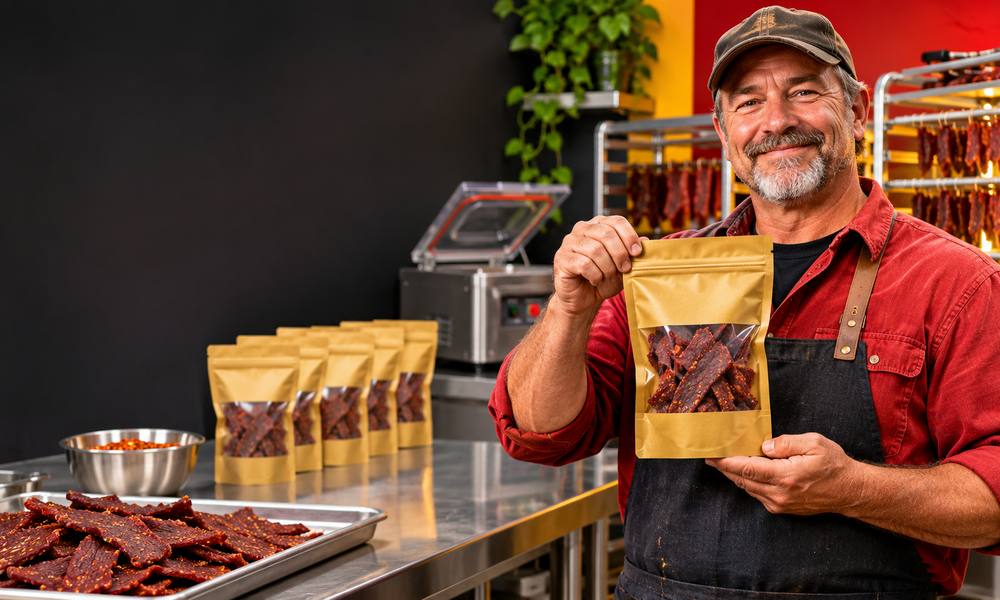
Could a small-batch beef jerky brand become a business that fits your skills and interests? Jerky has a familiar appeal, travels well, and can be offered in a range of flavors. But selling a meat product involves more than finding a recipe and buying a dehydrator. A serious plan needs to cover food safety, regulatory approval, production capacity, packaging, pricing, and how customers will discover the brand.
The Beef Jerky Business Course at BizCoach.Biz is designed to help you explore those questions step by step. This article introduces the opportunity and the planning work involved; it is not a substitute for advice from your regulator or a qualified food-safety professional.
What a beef jerky business does
A jerky business turns a carefully controlled meat-processing process into a product customers can buy repeatedly. An owner may develop recipes, source meat and seasonings, coordinate production, package and label each batch, sell directly online or at local markets, and build wholesale relationships with retailers. Some brands concentrate on a single signature flavor. Others serve customers looking for low-sugar, spicy, regional, or giftable snacks.
The business can start with a narrow product range, but the production side has real requirements. Meat must be handled, processed, and packaged under the rules that apply to the product, the facility, and the sales territory. Before investing in equipment or printing labels, find out which agencies regulate your exact plan.
Choose a customer and a point of difference
Start by identifying who you hope will buy the jerky and why they would choose yours. Possible audiences include hikers, anglers, commuters, sports fans, local-food shoppers, gift buyers, and people who enjoy bold flavors. These are research ideas, not proof of demand. Talk with likely customers, review competing products and prices, and ask store owners what their shoppers request.
Then define a clear position. You might emphasize a distinctive flavor, a local story, a convenient single-serving pouch, or a gift box with several varieties. Avoid promising health benefits unless you can legally support the claim. A simple brand is easier to test: one target customer, a small number of recipes, and a clear reason to try the product.
Develop the product with safety first
Recipe development must be tied to a repeatable, validated process. The thickness of the meat, ingredients, drying conditions, humidity, temperature, and packaging can all affect the finished product. A batch that looks dry or tastes good is not automatically safe or shelf-stable. Keep written records and work with qualified food-safety experts and the appropriate regulator before selling.
USDA’s Jerky Compliance Guideline for small and very small establishments explains technical food-safety considerations for inspected meat and poultry plants. The guideline is a reference, not a license or a ready-made process for every product. USDA’s home jerky safety guidance is intended for home preparation; it does not approve a commercial process.
Confirm the rules before you build
Beef jerky is a meat product, so the agency and inspection path can depend on your product and where you plan to sell it. Ask whether your proposed establishment must receive federal or state inspection, what food-safety plan and records are required, and whether the planned sales channels are allowed. Federal and state rules can differ in how products may move across state lines. The USDA FSIS overview of meat inspection is a useful starting point, but speak directly with the agency that has jurisdiction over your operation.
Also check business registration, zoning, fire and building rules, water and wastewater requirements, employee training, and local permits. The FDA’s How to Start a Food Business page explains that federal, state, and local requirements depend on the food and facility. Contact the USDA FSIS Small Plant Help Desk or your state department of agriculture for guidance before signing a lease or buying production equipment.
Plan the facility and equipment
After the regulatory path is clearer, map the work from receiving ingredients to shipping finished packages. The layout should support clean separation of tasks, sanitation, temperature control, pest prevention, and safe storage. A commercial kitchen or inspected co-packer may be a practical route for some new businesses; whether either option works depends on your regulator, process, and contract terms.
Potential equipment includes refrigerated storage, cutting tools, scales, a controlled drying system, thermometers, sanitation supplies, packaging equipment, and lot-tracking materials. The right list depends on the approved process and production volume. Avoid buying household equipment on the assumption that it can be used in a commercial facility. Build a budget for installation, maintenance, calibration, utilities, cleaning, and backup capacity—not just the purchase price.
Build packaging and labels carefully
Packaging protects the product and communicates the brand, but it also has to fit the product’s validated storage conditions and applicable rules. Discuss required label elements with the regulator before final artwork. Depending on the product, labels may need accurate product identity, ingredient and allergen information, net quantity, business details, safe-handling or storage statements, and inspection information. Nutrition and marketing claims have their own rules. Do not assume a homemade label template is compliant.
Choose packaging that is practical to seal, store, ship, and display. Test how the package holds up to handling and shipping as part of the approved plan. Use clear lot codes and retain production records so you can trace ingredients and finished batches. Good records support routine quality control and give you a way to respond quickly if a problem is reported.
Know your costs and set a price
Calculate cost per sellable package, not just the cost of raw meat. Include seasoning, packaging, production labor, facility time, utilities, testing, shipping materials, payment fees, marketplace fees, spoilage, insurance, and marketing. Since meat loses weight during processing, compare costs against the final packaged yield. Track the cost of each recipe separately so a popular flavor does not quietly become your least profitable one.
Research prices for similar products in the same size and sales channel. A direct-to-customer price must also leave room for promotions and shipping. Wholesale pricing needs to account for the retailer’s margin and any distributor costs. Test a few package sizes and bundles, then review actual sales and expenses. Revenue is not profit, and no business course can guarantee a particular income.
Find the first customers
Use market research to choose a first sales channel. Depending on the approvals you receive, possibilities may include a brand website, online marketplaces, local retailers, specialty shops, sporting goods stores, gift baskets, or events. Ask your regulator before offering samples or selling at a market. Each channel has different fees, packaging expectations, order sizes, and delivery needs.
Create a simple website that explains the product, flavor options, package sizes, ingredients, shipping policies, and how customers can contact you. Post useful content about recipe inspiration, the care that goes into production, and where customers can buy. Collect email addresses with clear consent, invite reviews after delivery, and follow up with past customers when you introduce a new flavor or seasonal bundle. Keep promotional claims accurate and compliant.
Manage production and customer service
Write down each repeatable task: receiving supplies, sanitation, production records, packaging, order checking, inventory counts, and customer follow-up. A calendar or basic bookkeeping system helps you see when ingredients need to be reordered and which products sell through. Reconcile sales deposits and expenses regularly, save receipts, and keep business and personal finances separate. Ask an accountant about the best structure and tax records for your situation.
Set realistic lead times and communicate clearly when a product is temporarily unavailable. Respond to complaints calmly, record the batch and order details, and follow your documented procedure for product-quality or safety concerns. If an issue suggests a potential safety problem, contact your regulator and follow its instructions. Strong service comes from reliable processes as much as from friendly marketing.
Grow only when the numbers support it
Once you can make a consistent product and see repeat purchases, consider whether to add a flavor, increase production, or approach more retailers. Measure repeat orders, product returns, average order size, production time, and gross margin. A co-packer, distributor, employee, or larger facility can help with growth, but each adds cost and oversight. Expand in stages and keep enough working capital to cover ingredients and packaging before sales arrive.
Learn the business steps at BizCoach.Biz
The Making Beef Jerky: Premium Small-Batch Business Course walks through the planning questions, product and customer research, business setup, marketing, bookkeeping, and resources to investigate. It is intended to help you organize your next steps and ask better questions as you confirm the requirements for your location and product.
BizCoach.Biz also offers other business opportunity courses, including ideas such as pet sitting, junk removal, event planning, wedding planning, mobile notary services, and hotshot delivery. The site also has “Stuff Every Business Needs” training on topics such as WordPress, Elementor, social media, blogging, email lists, and using AI to write business content. Browse Business Opportunities or explore Stuff Every Business Needs.
One purchase gives you access to all the paid courses, with no monthly fee and no time limit to complete them. See the current details at BizCoach.Biz and choose the lessons that fit the business you are planning.
Take your first step
If a beef jerky business interests you, begin with research rather than equipment. Define the customer, talk to your regulator, explore approved production options, and estimate the cost of a small launch. Then use the BizCoach.Biz course to turn those findings into a written plan. Careful preparation can help you decide whether the opportunity is a good fit and what needs to happen before you sell your first package.