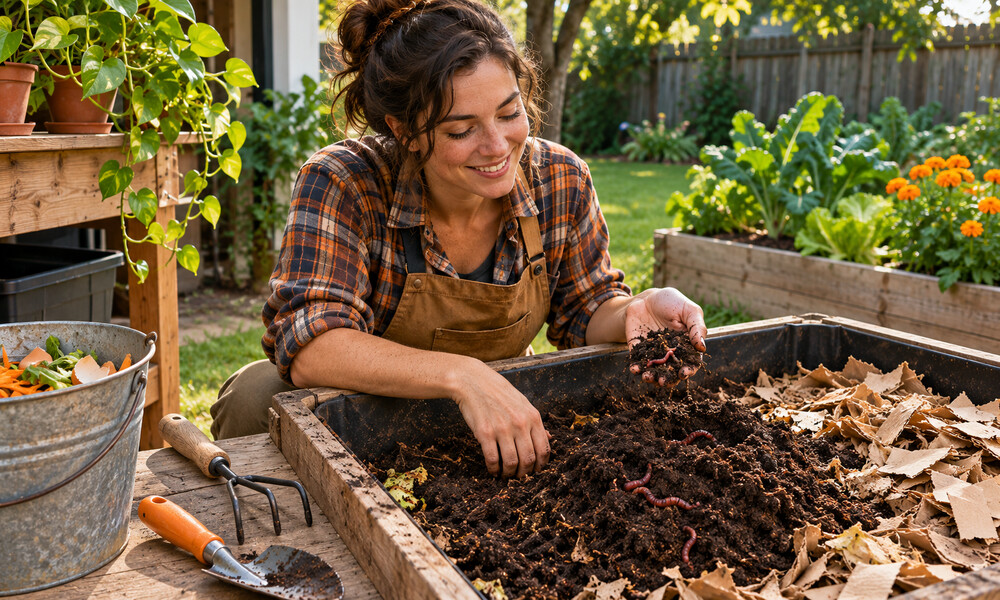
Could a small worm farm become a practical one-person business? It can, when you treat it as a production and sales operation instead of a magic bin that makes money on its own. A worm farmer checks living beds, manages feed and moisture, harvests and packs products, answers customers, and keeps records. The work can fit a small space, but it takes steady attention, a reliable supply of suitable material, and proof that people nearby will buy.
What does a day in worm farming look like?
The day usually begins with a walk through the beds. You check the temperature, moisture, airflow, drainage, bedding, and how much of the last feeding remains. You look for odors, pests, escaping worms, or a section that is unusually hot, wet, or dry. A healthy system should have an earthy smell. A sour or rotten odor can signal too much food, excess water, or poor airflow. The goal is to spot small problems before they affect a whole bed.
Next comes feeding and bedding. You prepare modest amounts of suitable plant-based scraps or other approved feedstock, spread them in selected pockets, and cover them with bedding. You do not need to feed every bin every day; the schedule depends on how quickly the worms consume what is already there. Overfeeding can create heat, odors, flies, and low-oxygen conditions. Keep notes about what went into each bed and where it came from. If a restaurant, produce stand, or other business supplies material, arrange permission and a consistent pickup routine rather than assuming the scraps will always be available.
Some days include harvesting. You separate finished castings from worms and unfinished material, screen the product to the grade you promised, and return healthy worms and cocoons to the production beds. Then you weigh, label, and package orders. A local pickup might be a small starter quantity of live red wigglers, while a garden shop may want cleanly bagged castings in repeatable sizes. Live products need suitable packaging and careful timing; finished castings need clean storage and accurate net weights.
The business side fills the rest of the day. You reply to questions, confirm orders, arrange pickup or shipping, post a useful photo or short demonstration, and contact potential buyers. At closing, clean tools and work surfaces, record sales and expenses, and plan the next feedstock pickup or harvest. In a small, stable setup, daily checks may be brief. Harvesting, packing, deliveries, equipment repairs, and unusually hot or cold weather can turn a short routine into a longer workday.
Who are the customers?
Potential buyers include home gardeners, vegetable growers, houseplant enthusiasts, community gardens, school garden programs, garden clubs, nurseries, garden centers, landscapers, small farms, composting educators, bait shops, and fishing customers. Some want a modest starter quantity of worms for a home bin. Others want castings for beds and containers, a ready-to-use worm-bin kit, bulk material, or a hands-on demonstration.
Each group buys differently. A beginner may need a simple kit and clear care instructions. A nursery may ask for consistent packaging, a wholesale price, a label, and dependable delivery. A school or library may need a scheduled workshop, age-appropriate materials, and paperwork before approving a vendor. A bait shop will care about availability and pickup timing. Decide which customer you can serve well before investing in a large production system.
Talk with buyers before expanding. Ask what they currently purchase, how much they use, what package size they prefer, when they need it, and whether they collect it or expect delivery. Ask what quality or documentation they require and what they would pay for a small trial. Keep a list of names, conversations, next steps, and actual purchases. “That sounds interesting” is encouraging, but repeat orders are stronger evidence of demand.
How much can a worm farmer make?
There is no dependable national income figure for a worm farm. Sales depend on your products, production capacity, season, local competition, shipping costs, customer relationships, and how much time you spend producing and selling. A price someone lists online is not a guarantee that you can sell the same item at that price in your area. Separate gross sales from profit: money received is not money kept.
Here is a simple illustration, not an earnings promise: suppose a small operation sells eight live-worm orders at $30 each in a month, twenty bags of castings at $12 each, and one $100 workshop. That is $580 in gross sales. If that month’s feedstock, bedding, packaging, payment fees, delivery, market fees, equipment allowance, and other expenses add up to $230, $350 remains before taxes and before assigning a value to the owner’s labor. If it took 25 hours to produce, pack, sell, and deliver everything, the owner should also ask whether the remaining amount fairly compensates that time.
Your own numbers may be much lower or higher. Some months may have few orders; spring gardening can be busier than other seasons. A farm might sell only worms at first, or combine live worms with castings, starter kits, classes, and bulk orders. Calculate a floor price for every product: materials + labor + packaging + delivery or postage + fees + overhead + an allowance for losses. Track the result by product. If a product sells but costs too much time or money to fulfill, adjust its price, process, or offer.
Start with a pilot. Measure how much product you can harvest without weakening your breeding stock, how many orders customers actually place, how much is rejected or lost, and how long each task takes. Expand only after you can supply consistent quality and have evidence of repeat demand. More bins mean more feedstock, monitoring, harvesting, storage, and customer service—not automatically more profit.
What restrictions and practical limits should you expect?
Rules depend on what you sell, where your farm is located, and where you ship. Before buying equipment or advertising nationwide, contact your state Department of Agriculture and ask about earthworm movement, species restrictions, sales, registrations, product labeling, and fertilizer or soil-amendment requirements. Check city and county zoning, home-business, nuisance, drainage, and waste-handling rules. Ask your state tax agency how your products and delivery charges are treated.
For live worms, the USDA APHIS earthworm guidance says a federal PPQ 526 permit is required to import earthworms from another country. It also says state and territory approval is required for earthworm movement, and special federal rules may apply for movement to Hawaii, Puerto Rico, the U.S. Virgin Islands, and U.S. territories. Requirements can depend on the origin, destination, species, and shipment. Verify with the relevant authorities before accepting an order; do not assume a rule for one state applies everywhere.
Castings and other soil products may have separate rules for registration, labeling, testing, or nutrient claims. Ask the state agency what applies to your exact product and sales locations. Label honestly, use accurate weights, and avoid claims that promise a specific plant yield or cure a plant problem unless you have the required evidence and approvals. Keep batch records so you can identify the inputs and production history behind each product.
There are biological limits too. Worms need suitable moisture, airflow, food, and protection from temperature extremes. A hot garage, flooded yard, or freezing week can threaten stock. Feedstock can be contaminated, inconsistent, or unavailable. Keep unknown chemicals and treated materials away from beds, prevent pests, and do not release purchased or nonnative worms outdoors. Oregon State University Extension’s guide to composting with worms explains the importance of moisture, air, and careful feeding.
Finally, the work is hands-on. You may lift containers, sift material, clean tools, and handle orders even when weather is inconvenient. A worm farm can be started modestly, but it is not entirely passive and income is not guaranteed. Plan for seasonal slowdowns, customer questions, packaging failures, replacement orders, and the hours needed to keep the beds healthy.
Is worm farming a good fit for you?
It may suit someone who enjoys gardening, composting, careful observation, and practical customer service. It is easier to test when you have a suitable sheltered site, a dependable feedstock source, time for regular checks, and buyers within reach. Before scaling, make a small sample batch, confirm the rules, speak with likely customers, and calculate your costs—including your time.
For a step-by-step plan, see the complete Worm Farming business course on BizCoach.Biz. It covers choosing a model, setting up a pilot, daily operations, pricing, finding customers, shipping, recordkeeping, and launch checklists. Use it to organize your research, then verify current requirements with your state and local authorities before making sales.