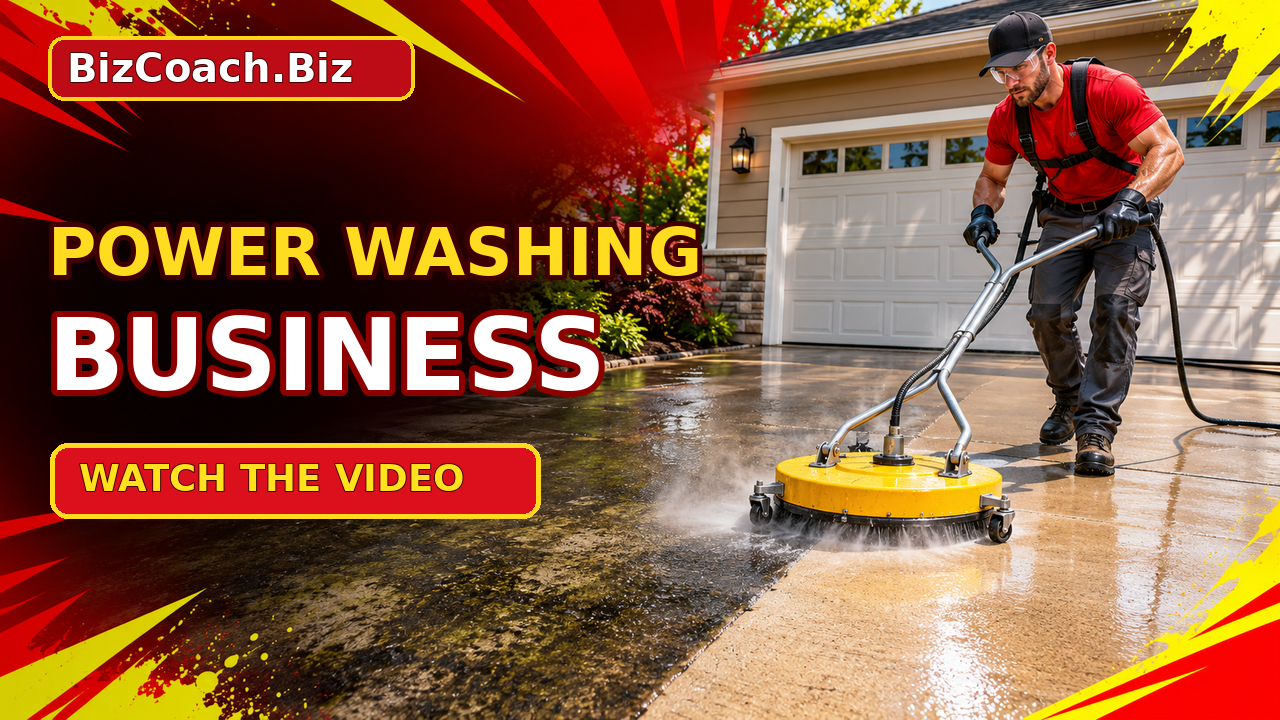
A power washing business can turn practical work into a service customers need year after year. Homeowners want driveways, patios, siding, fences, and walkways cleaned. Commercial customers may need storefronts, entryways, parking areas, and other outdoor surfaces maintained. The work is visible: a dirty surface becomes noticeably cleaner, and satisfied customers can see the result right away.
Starting a business still takes more than buying a pressure washer. You need to choose services carefully, price jobs consistently, protect yourself and your customers, keep records, and find a steady stream of work. BizCoach.Biz offers a Power Washing Business course to help new owners work through those decisions step by step.
Begin with a clear service area and customer
Decide where you will work before you start advertising. A practical service area should be large enough to find customers but small enough to keep travel time and fuel costs under control. You might begin with a few nearby neighborhoods, then expand as you learn which areas produce repeat calls and referrals.
Think about the customers you want to serve. Residential jobs can include driveways, sidewalks, patios, decks, fences, and suitable exterior surfaces. Business customers may ask about building entrances, sidewalks, dumpster pads, or other areas that need regular attention. Not every surface should be cleaned with the same method or pressure, so learn the material and the right approach before accepting a job. The BizCoach.Biz course helps you consider service choices and the time different jobs can take.
Choose equipment for the work you plan to do
It is tempting to buy the largest machine you can afford, but the best setup depends on the jobs you intend to handle. Research pressure washers, hoses, spray guns, surface cleaners, nozzles, protective equipment, and any supplies needed for your chosen services. Consider how you will transport and secure the equipment, where you will store it, and how you will maintain it.
Learn the difference between pressure and water flow, and understand when a surface cleaner or a gentler washing method is appropriate. Practice before working on a customer’s property. A test area can help you confirm your technique and avoid damage. The course at BizCoach.Biz covers equipment and supplies as part of the startup planning process, so you can make decisions based on the jobs you expect to sell.
Put safety and property protection first
Water under pressure can injure people and damage surfaces. Before beginning, inspect the work area, identify electrical hazards, loose materials, delicate landscaping, windows, doors, and anything that should be moved or protected. Keep people and pets away from the work zone. Use appropriate eye, hearing, hand, and footwear protection, and follow the equipment manufacturer’s operating instructions.
Ask the customer about known problems before you start. Photograph the area when useful, agree on the surfaces included in the job, and explain any limitations. Be especially careful around painted surfaces, wood, mortar, and older materials. Learn how runoff should be handled in your location and check local rules for water use, wastewater, and chemical products. Rules differ by city, county, and state, so verify requirements where you plan to work.
Set prices with a repeatable process
A reliable estimate accounts for more than the time spent spraying. Consider travel, setup, cleanup, fuel, water, detergents or other supplies, equipment wear, insurance, taxes, payment fees, and the time you spend communicating with the customer. Walk the property or request clear photos, note access issues, and estimate the amount of work before giving a firm price.
Write down what the quoted job includes: the surfaces, approximate scope, preparation, and any exclusions. Make clear how the customer can approve the work and when payment is due. Keep notes about the time each type of job takes. Over time, those records will help you refine estimates and recognize which services are worth offering. The BizCoach.Biz course includes pricing guidance and examples to help you build a consistent approach instead of guessing on every call.
Check business, insurance, and recordkeeping needs
Choose a business name and decide how you will operate. Depending on your location and business structure, you may need to register a business, obtain a local license or permit, collect taxes, or follow other rules. There is no single checklist that applies everywhere in the United States; contact the appropriate state, county, and city offices and ask what applies to your specific service.
Talk with an insurance professional about coverage for the work you plan to perform, your equipment, and possible damage or injury claims. Keep copies of estimates, approvals, receipts, invoices, mileage, equipment purchases, and customer payments. Separate business and personal records as appropriate, and set aside time every week to update them. Good bookkeeping gives you a clearer picture of expenses, income, and upcoming obligations. BizCoach.Biz’s Power Washing Business course walks through business planning, insurance, licensing considerations, and bookkeeping topics for people getting started.
Make it easy for customers to find and trust you
Begin with a simple, professional presence. A website can explain your service area, list the surfaces you clean, show before-and-after photos you have permission to use, and give customers an easy way to request an estimate. Use a dedicated business phone number or a dependable way to respond to inquiries. Keep your name, contact details, and service description consistent wherever you advertise.
Ask satisfied customers for honest reviews and permission to share project photos. Follow up politely after the job, and thank customers who refer you. You can reach nearby homeowners through community groups, neighborhood newsletters, local business connections, door hangers where allowed, and a properly maintained online business listing. Track where each inquiry came from so you can focus on the methods that bring real customers. The course at BizCoach.Biz covers marketing, website planning, and referral building as part of the whole business—not as an afterthought.
Plan each job and build repeat business
When a customer contacts you, ask what they want cleaned, where the property is, what the surface is made of, and whether there are access or water-supply concerns. Explain that you may need to inspect the area before confirming the estimate. Schedule enough time for setup, work, cleanup, and travel rather than packing the day too tightly.
After each job, confirm that the agreed areas are complete, clean up equipment, and walk through the result with the customer when possible. Save notes about the service, the customer’s preferences, and any follow-up they requested. Some customers may want recurring maintenance, while others may call again when another surface needs attention. Consistent communication and careful work can turn a one-time cleaning into a referral or repeat customer.
Learn the business before you take the first big step
You do not need to know everything on day one, but you should have a plan for learning. Start with a manageable service list, practice safely, and keep improving your estimates and customer conversations. Watch your costs and avoid buying equipment simply because it looks impressive. As your experience grows, you can decide whether to add services, serve a wider area, or hire help.
The Power Washing Business course at BizCoach.Biz is designed to help you think through the process from the beginning. It includes lessons and examples on equipment, supplies, pricing, marketing, bookkeeping, insurance, licensing considerations, contacts, and estimating the time jobs may require. It is a practical place to organize your questions and make a startup checklist that fits your area and goals.
Take the next step
If you are considering a power washing business, take time to plan before you invest. List the services you want to offer, research local requirements, compare equipment for those services, and sketch out how you will quote and promote your work. Then use the course to work through the details and turn your ideas into a clear next-step plan.
Ready to explore the opportunity? Visit BizCoach.Biz and look for the Power Washing Business course. Start learning what it takes to prepare, find customers, protect your work, and build a service business one job at a time.